Blind Shaker vs WDT Tool: Which Puck Prep Method Should You Use?
Published How we research
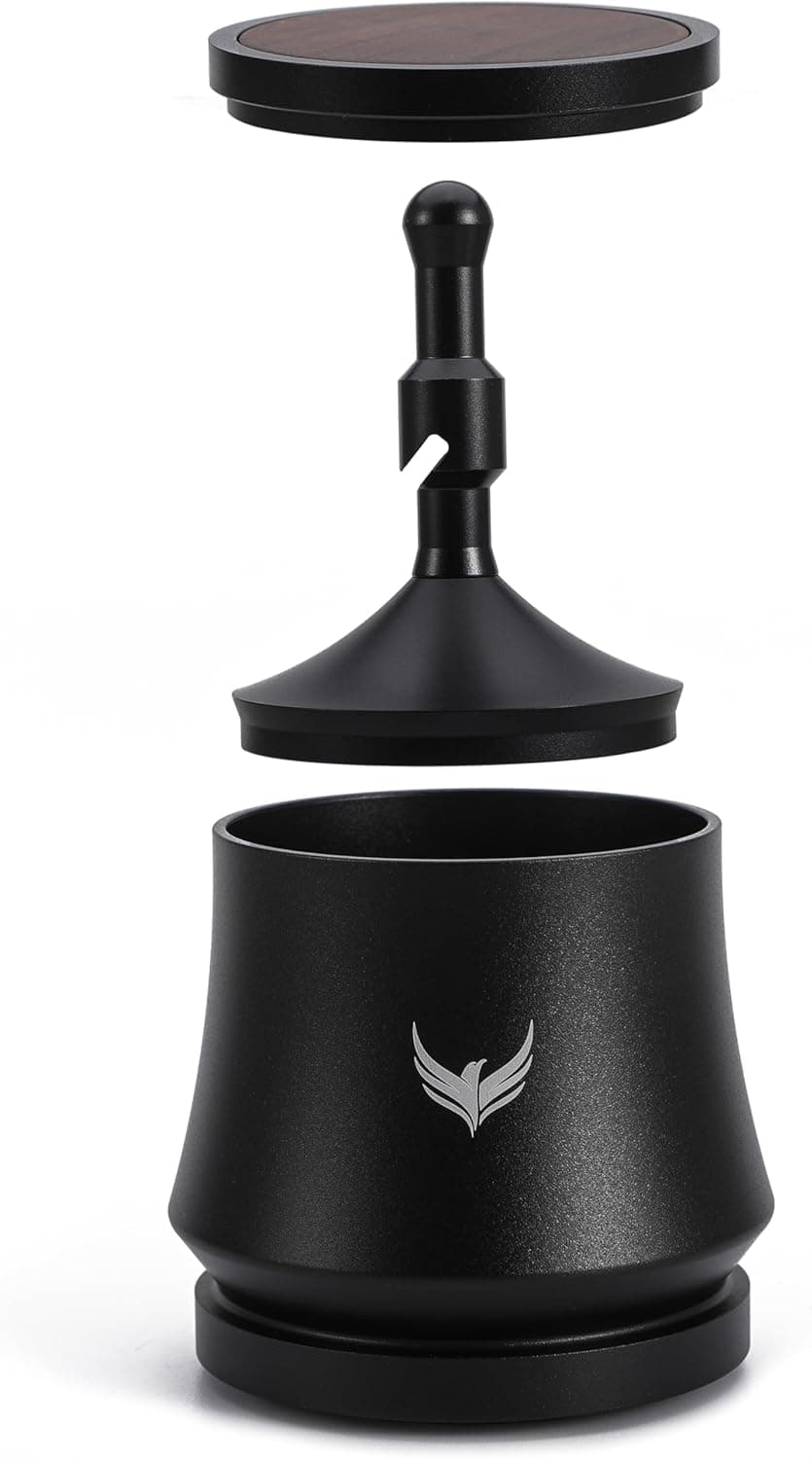
Use a blind shaker if you single dose and can grind straight into a cup: it mixes and declumps the whole dose in a few seconds with almost no technique. Use a WDT tool if your grinder doses directly into the portafilter, if you want the cheapest fix for clumps, or if you like to control exactly how the bed is laid out. Both exist to do the same job, which is to give water an evenly dense puck so it does not find a weak spot and channel. They get there in different ways, and the right pick depends more on your grinder and workflow than on which tool is better in the abstract.
What each tool actually does
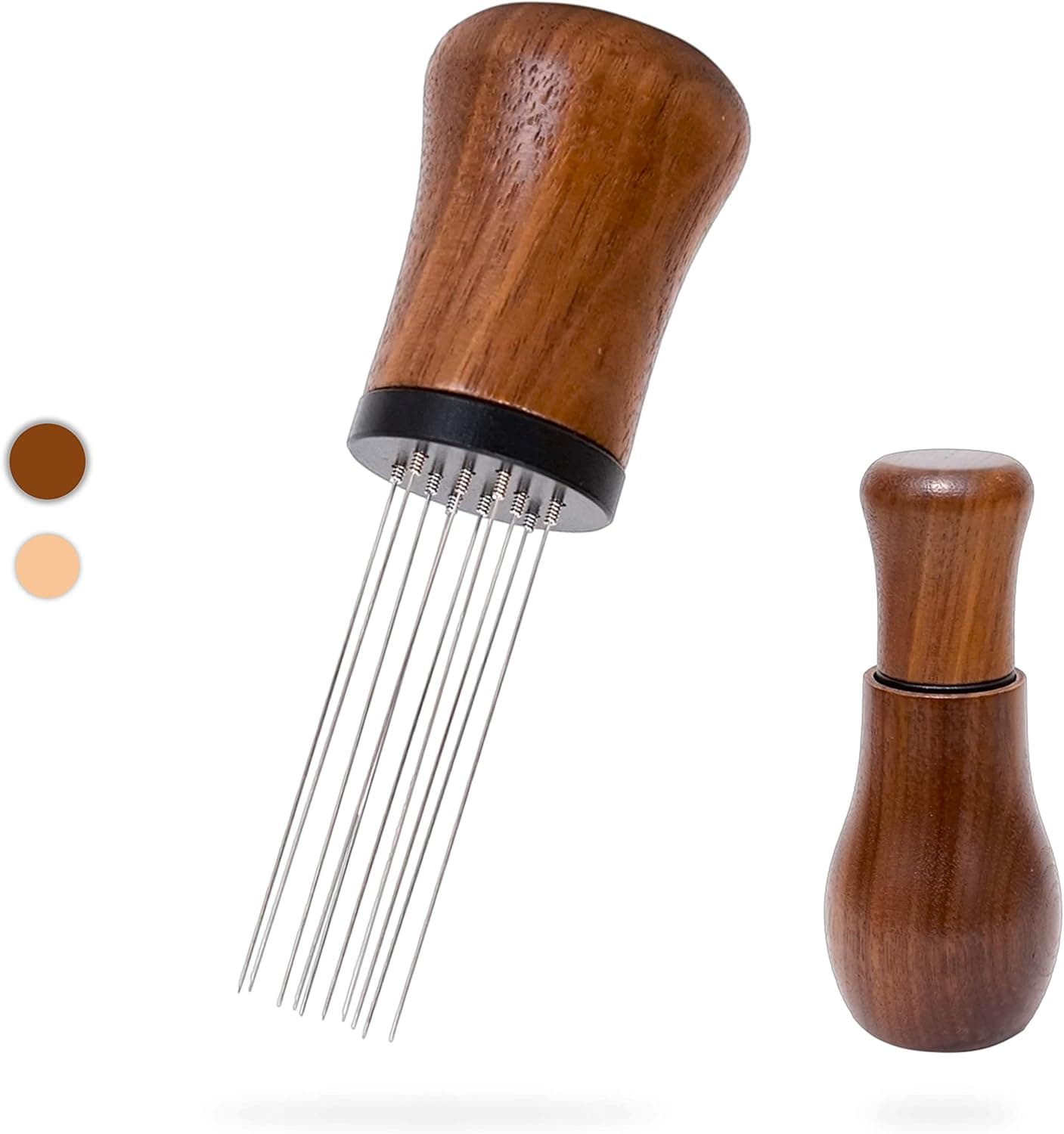
WDT stands for Weiss Distribution Technique, named after John Weiss, who described it for home espresso in the mid 2000s. You stir the grounds in the basket with a set of very thin needles, usually 0.25 to 0.4mm thick. The needles break up clumps and move coffee from dense areas to loose ones, so the bed has the same density from the center to the wall and from the bottom to the top.
A blind shaker is a dosing cup with a lid and a closed (blind) bottom, held shut by a center plug or a sliding base. You grind into it, cover it, shake for a few seconds, set it on the portafilter and lift the plug so the grounds drop into the basket. The shaking tumbles fine and coarse particles together and knocks clumps apart against the walls. Where WDT fixes the bed after the coffee is in the basket, the shaker fixes the dose before it gets there.
Workflow and speed
The shaker is the faster routine once it fits your setup. Grind into the cup, shake for about 5 to 10 seconds, drop, give the portafilter a light tap to settle the mound, then tamp. There is no stirring pattern to learn and very little that can be done wrong, which is why results tend to be consistent from the first day.
WDT takes a little longer and depends on technique. A good routine starts with the needles touching the bottom of the basket, moves in small overlapping circles across the whole bed, then finishes with a shallow pass to level the surface. That is 10 to 20 seconds per shot, and you need a dosing funnel on the portafilter or grounds end up on the counter. Rushing it, or raking only the top few millimeters, leaves clumps in the lower half of the puck where you cannot see them.
Which one gives a more even puck
Both methods, done properly, remove the clumps that cause most channeling. The shaker took off after widely shared extraction comparisons in 2023 suggested that shaking could match or beat needle stirring, and the likely reason is that it mixes the dose as a whole. Grinders do not deliver fines and larger particles evenly through the grind, so the first and last grams out of the chute differ. Shaking blends them, while stirring in the basket mostly rearranges coffee where it already sits.
WDT has its own advantage: you finish with a flat, even bed that you laid out yourself. Grounds dropped from a shaker land as a mound and depend on a tap or a light leveling pass to spread to the wall. With a deep WDT pass you can also deal with a grinder that throws coffee to one side of the basket. In practice the difference between the two is small next to the difference between doing either one and doing nothing. If your shots already run evenly from a bottomless portafilter, switching tools will not transform them.
Grinder and basket fit
Your grinder decides a lot here. A blind shaker suits single dose grinders that drop a weighed dose into a cup. It is awkward with grinders that hold the portafilter in a cradle and grind on a timer, such as the built-in grinders on Breville Barista machines, because you have to hold the shaker under the chute by hand while it grinds. WDT works with any grinder, since it happens after the coffee is already in the basket.
Size matters for the shaker and not for the needles. The shaker's outlet has to match your basket: 58mm for E61 and most prosumer machines, 54mm for Breville, 51mm for many DeLonghi models. A shaker that is too small drops coffee in a narrow pile, and one that is too large will not seat on the basket. A WDT tool fits every basket you own. Static also affects the shaker more: if grounds cling to the walls and lid, some of the dose stays behind. One light spritz of water on the beans before grinding usually solves it.
Needle thickness and other WDT details
If you go the WDT route, the needles matter more than the handle. Thin needles, around 0.3 to 0.4mm, pass through the bed and let it close behind them. Thick ones, such as a paper clip or a toothpick at 1mm or more, plow furrows that can become channels themselves. Look for 6 to 9 needles spread wide enough to cover the basket in a few passes, and for needles that can be replaced, because they bend with use. A stand keeps the tips straight and off the counter between shots.
Cost, cleanup and using both
A basic WDT tool costs less than a bag of good beans, and even the nicer ones with magnetic stands stay cheap. Blind shakers usually cost more, and you may need a second one if you own machines with different basket sizes. Cleanup is close to equal: needles get a wipe, and the shaker needs a brush or a dry cloth every few shots because fines build up on the lid and plug. Avoid washing the shaker right before use, since a damp cup makes grounds stick.
Some home baristas use both, shaking first and then making one quick shallow pass with the needles to flatten the mound before tamping. That is a reasonable routine if you already own both tools, but a deep stir after shaking adds time for little gain. If you are buying one tool today: choose the shaker if you single dose into a cup and want speed, and choose WDT if you grind into the portafilter, switch basket sizes, or want the lowest cost.
Frequently asked questions
Does a blind shaker replace a WDT tool? For most single dose workflows, yes. Shaking declumps and mixes the dose well enough that a deep needle stir is no longer needed. Many people keep a WDT tool only for a quick surface pass, or for the days they grind directly into the portafilter.
How long should you shake a blind shaker? About 5 to 10 seconds of firm side to side or circular shaking is the usual range. Shaking longer does not hurt, but it does not add much either. If you still see clumps when the grounds drop, the more likely cause is static or a very oily dark roast, not too little shaking.
Do you still need to tamp after using a blind shaker or WDT? Yes. Both tools only distribute the coffee. Tamping compresses the bed so water meets even resistance, and it should always be level. Neither tool will rescue a tilted tamp.
Is a spinning leveler the same as WDT? No. A spinning distributor smooths the top few millimeters of the bed and makes it look tidy, but it does not reach clumps deeper down. It can follow a shaker or a WDT pass as a final leveling step. On its own it does less than either of them.
Products from this article
The highest-scoring picks from the buying guides mentioned above. Scores are our editorial assessment, not customer ratings.
+ Shaking grounds inside the cup mixes and declumps before dosing
From our guide: Best Blind Shaker Cups
+ 10 fine needles break clumps quickly without packing the grounds
From our guide: Best WDT Tools
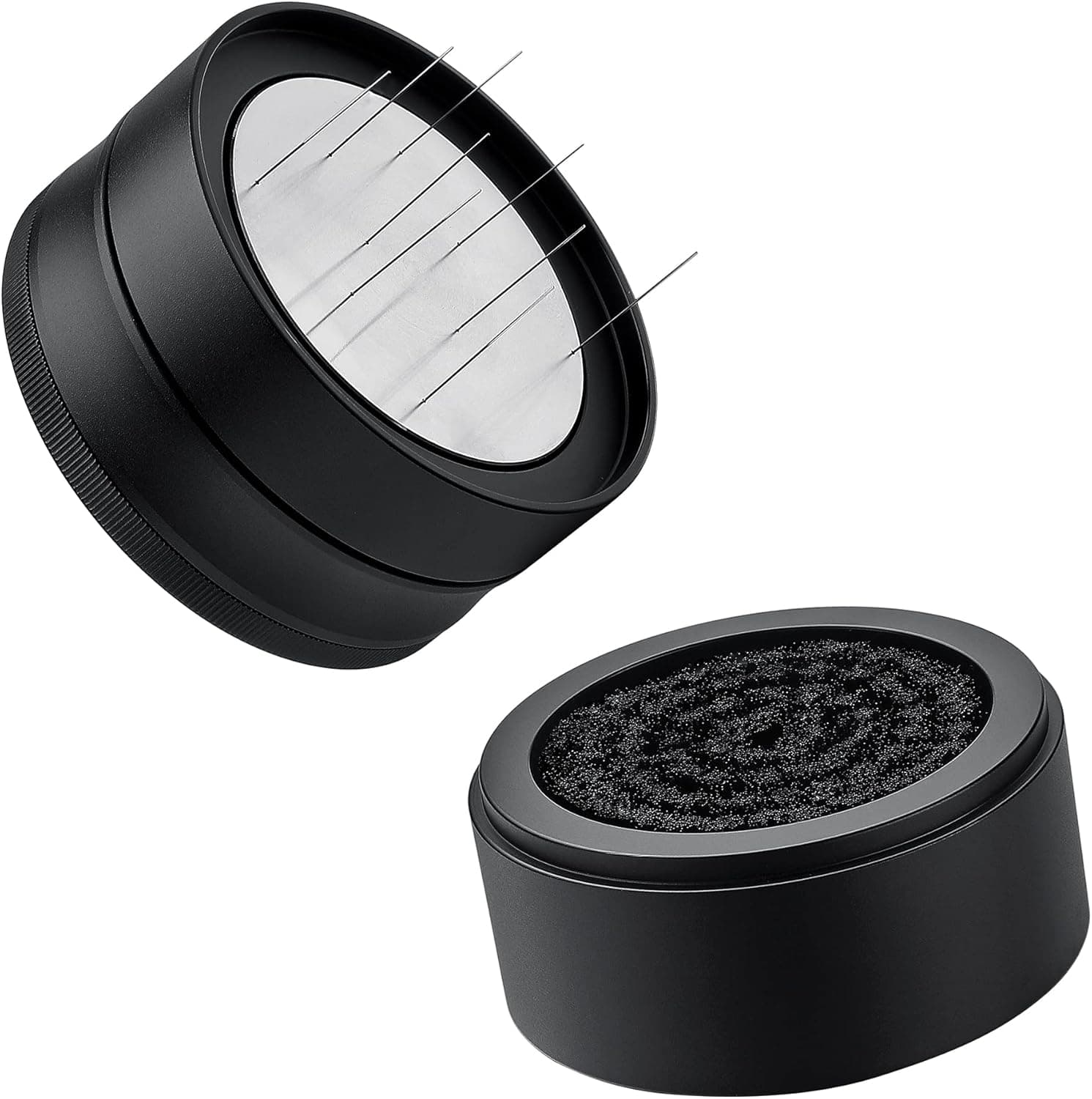
+ Needles break up clumps throughout the bed, not just at the surface
From our guide: Best Coffee Distribution Tools in 2026: Even Puck Prep for Better Shots
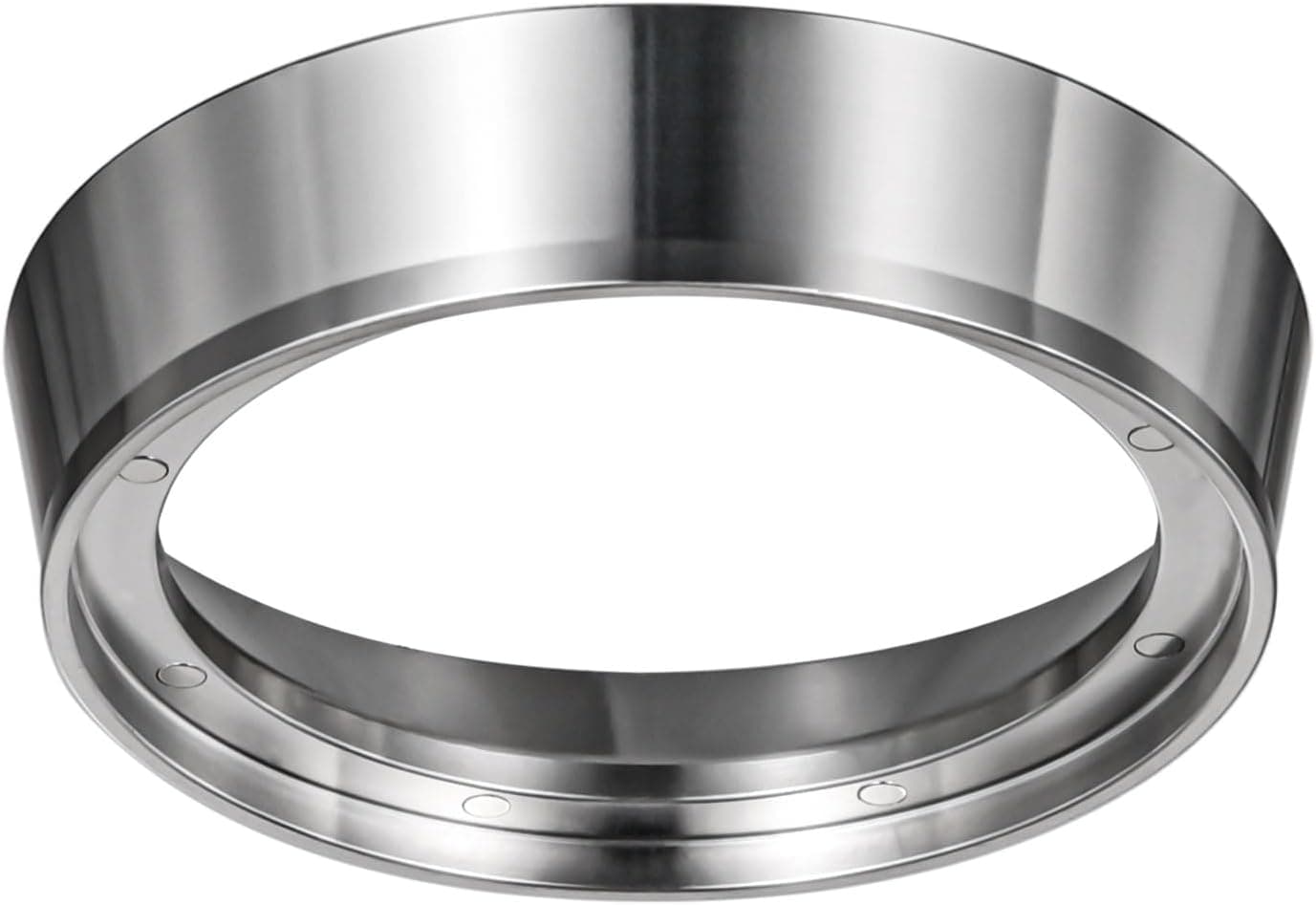
+ 8 magnets hold the ring firmly so it stays put during WDT stirring
From our guide: Best Espresso Dosing Funnels in 2026: Zero-Spill Portafilter Loading
Popular right now
- Best Coffee Distribution Tools in 2026: Even Puck Prep for Better ShotsBuying guide
- Best Blind Shaker CupsBuying guide
- How to Stop Espresso ChannelingArticle
- Milk Frothing TechniquesArticle
- Best Coffee Grinders Under $100Buying guide
- Espresso vs Drip CoffeeArticle
Based on the last 28 days of search and visitor data.