Cold Brew Coffee Recipe
As an Amazon Associate I earn from qualifying purchases.
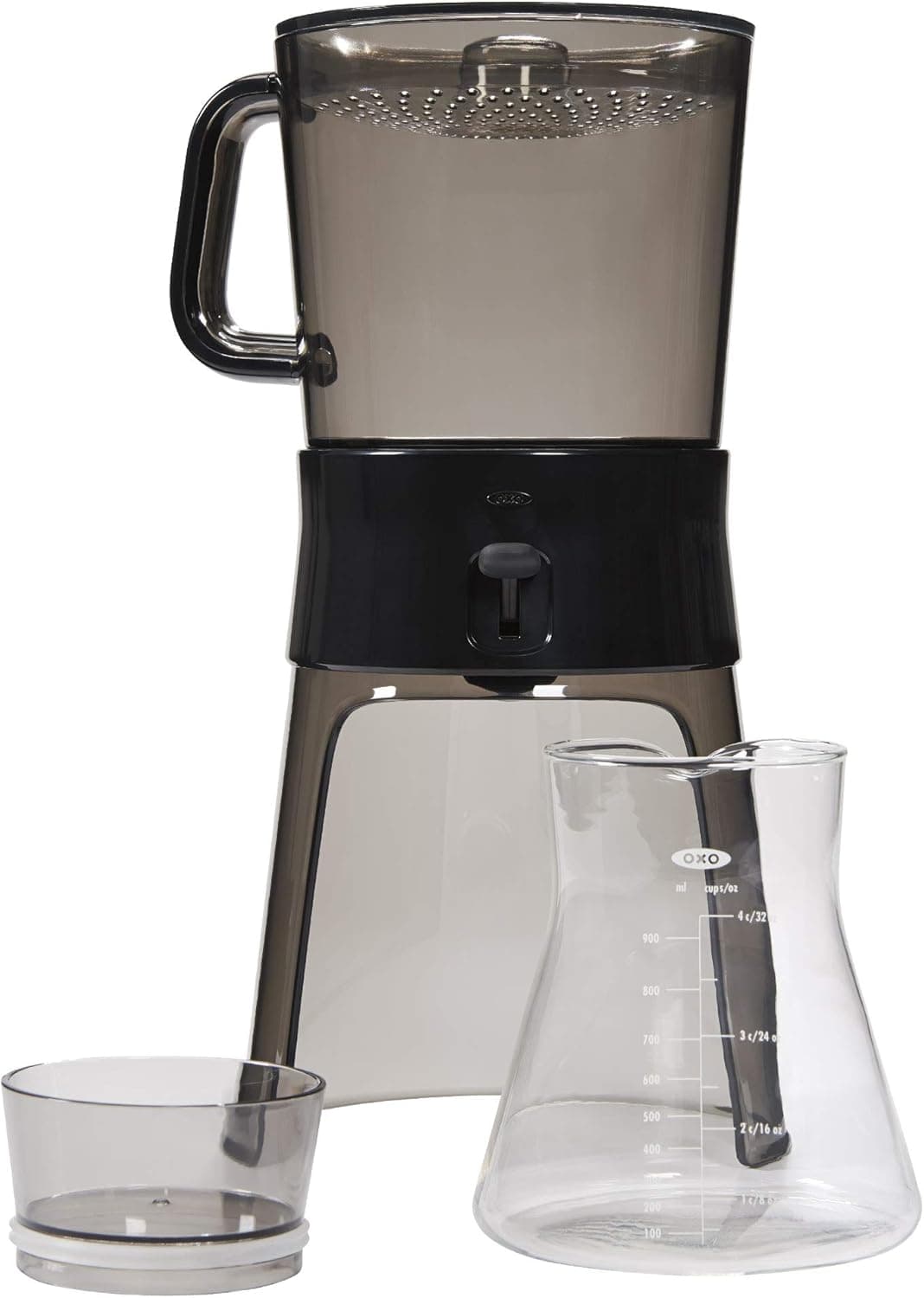
Cold brew has earned its place in home kitchens because it delivers something hot coffee cannot: a naturally sweet, smooth, low-acid cup that keeps for days in the fridge. The method is almost embarrassingly simple, which is part of the appeal. You steep coarse grounds in cold water for many hours, strain, and you are left with a concentrate that you can dilute however you like. There is no special equipment required beyond a jar and a way to filter.
The foundation of good cold brew is the ratio, and a solid starting point is one part coffee to four parts water by weight for a concentrate. If you prefer to eyeball it, that works out to roughly one cup of grounds to four cups of water. This gives you a strong base you will cut with water or milk later. Once you have tasted a batch or two, you can nudge the ratio stronger or weaker to match your own preference. Weighing rather than scooping gives you consistency you can actually repeat.
Grind size is the detail that separates smooth cold brew from a muddy, silty cup. You want a coarse grind, similar to raw sugar or coarse sea salt. Fine grounds slip through most filters and over-extract during the long steep, which brings in bitterness and grit. If you grind at home, run your burr grinder near its coarsest setting. If you buy pre-ground, ask for a French press grind, which is in the right range for this style of brewing.
Combine your grounds and cold, filtered water in a large jar or pitcher, then stir gently to make sure every ground is saturated. Cover it and let it steep. Room temperature works and tends to extract a touch faster, while the refrigerator produces an even cleaner result. Aim for twelve to eighteen hours. Shorter steeps taste weak and underdeveloped, while going much past a full day can start to pull out heavier, woody flavors you generally want to avoid.
Straining is where you protect all that smoothness. Pour the mixture through a fine mesh sieve first to catch the bulk of the grounds, then run it through a paper coffee filter, a nut milk bag, or a clean cloth for a polished final pour. Resist the urge to squeeze or press the grounds hard, since that forces fine particles and bitterness into your concentrate. Let gravity do the slow work and your patience will show in the cup.
To serve, fill a glass with ice and pour concentrate to fill roughly half, then top with water, milk, or a plant-based alternative until it tastes right to you. A common starting dilution is one part concentrate to one part water, adjusted from there. The finished concentrate keeps well in a sealed container in the fridge for up to two weeks, though the brightest flavor tends to land in the first week. Try it with a splash of vanilla, a pinch of cinnamon, or simply black over ice on a hot afternoon.