Espresso vs Drip Coffee
Published How we research

Espresso and drip coffee both start with roasted beans and hot water, yet they produce very different drinks. Understanding how each is made helps you decide what belongs on your counter, and clears up some common myths, especially the one about which has more caffeine. The differences come down to pressure, grind, contact time, and how you tend to drink each one.
Products from this article
The highest-scoring picks from the buying guides this article links to. Scores are our editorial assessment, not customer ratings.
+ 2200g capacity handles a full carafe plus dripper and water
From our guide: Best Coffee Scales
+ Long handles reach the bottom of deep coffee bags
From our guide: Best Coffee Scoops
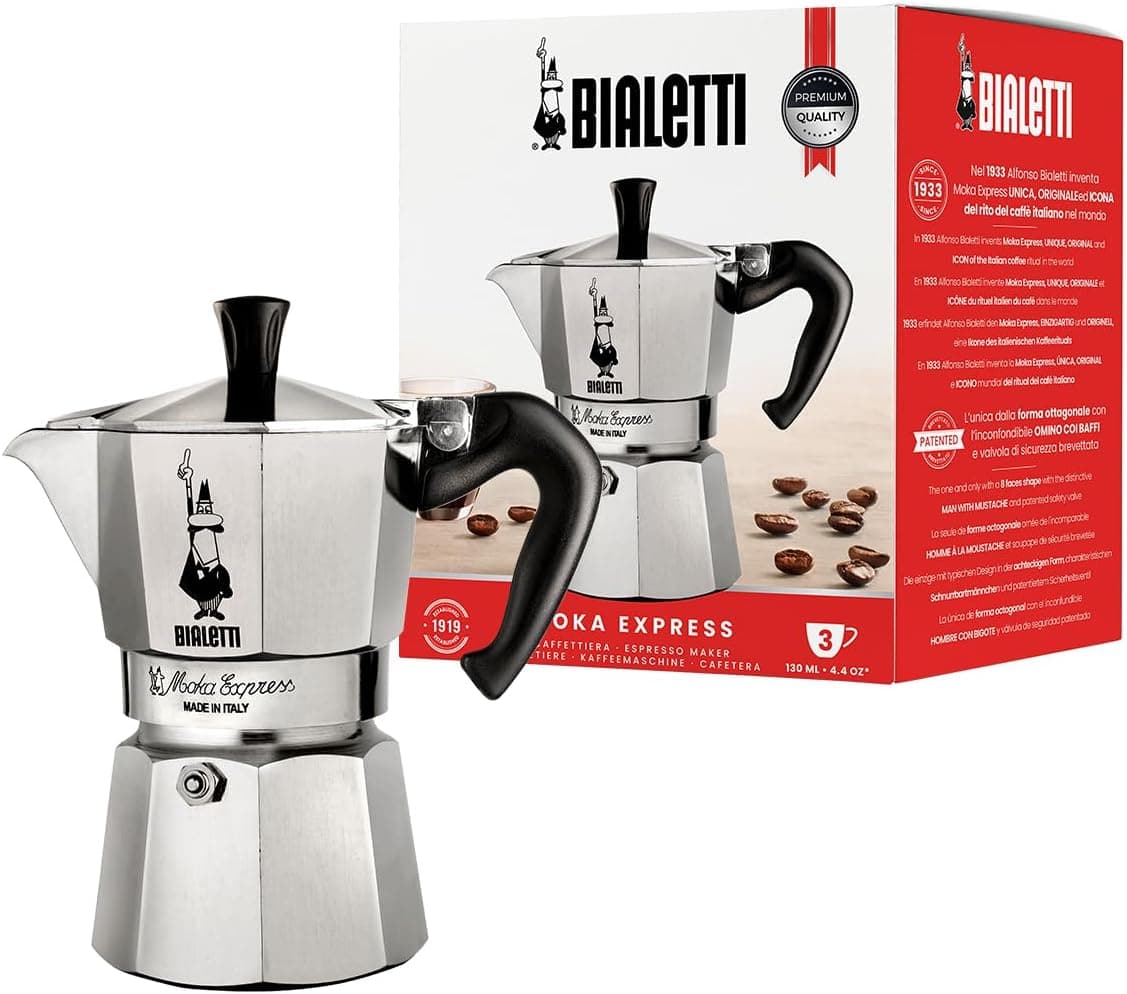
+ Iconic Bialetti design has brewed stovetop coffee for generations
From our guide: Best Moka Pots
+ 0.1g precision helps weigh small doses and water accurately
From our guide: Best Coffee Scales



Drip coffee is the method most Americans grew up with. Hot water passes slowly through a bed of medium ground coffee held in a filter, drawn down by gravity alone. The result is a clean, comfortably sized cup, usually eight to twelve ounces, that you can sip over a morning. It is gentle, approachable, and forgiving of small mistakes, which is a big part of why it remains the default at home and in offices.
Espresso is a different animal. A machine forces hot water through finely ground, tightly packed coffee under high pressure, producing about one to two ounces of intense, concentrated liquid topped with a layer of golden crema. The whole process takes around twenty five to thirty seconds. That concentration is why espresso serves as the base for lattes, cappuccinos, and Americanos, where it is diluted or combined with milk.
The caffeine question surprises many people. Ounce for ounce, espresso is more concentrated, but a single espresso shot is small. A full mug of drip coffee often contains more total caffeine than one shot simply because you are drinking so much more of it. So if you want a bigger caffeine load, a large drip may deliver more than a single espresso, even though the espresso tastes far stronger.
Flavor and mouthfeel diverge too. Espresso is bold, syrupy, and layered, presenting flavors in a compact, punchy form that fades quickly. Drip is lighter bodied and more delicate, letting subtle floral or fruity notes stretch across a longer drink. Neither is better in an absolute sense. They are simply different experiences, and many coffee lovers happily keep both in their routine depending on the moment.
Cost and effort round out the comparison. A quality drip brewer is inexpensive and nearly hands off, ideal for brewing several cups at once. A capable espresso machine and a grinder that can handle a fine, consistent grind cost more and ask for more skill and cleanup. If you love milk drinks and enjoy the craft, espresso rewards the investment. If you want reliable volume with minimal fuss, drip is hard to beat. Choose based on how you actually drink coffee, not on which sounds more impressive, and you will be happy with the machine on your counter.
Popular right now
- Best Blind Shaker CupsBuying guide
- Best Coffee Distribution Tools in 2026: Even Puck Prep for Better ShotsBuying guide
- WDT explainedGlossary
- How to Stop Espresso ChannelingArticle
- Best Latte Art Pens in 2026: Etching Tools for Detailed DesignsBuying guide
- Small Space Coffee Bar KitCollection
Based on the last 28 days of search and visitor data.