How to Choose a Cold Brew Maker: Jar, Pitcher or Drip Tower
Published How we research
Choose a cold brew maker by three things: how much coffee you drink, how long you are willing to wait, and how much cleanup you will tolerate. For most households a 1 to 2 quart immersion pitcher with a fine mesh filter is the practical answer, while a slow drip tower suits people who want a lighter, tea-like cup and do not mind a tall, fragile setup. The rest of this page works through capacity, filter type, brew time and storage so you can match a maker to your routine.
Products from this article
The highest-scoring picks from the buying guides this article links to. Scores are our editorial assessment, not customer ratings.
As an Amazon Associate we earn from qualifying purchases. This does not change our picks. Affiliate disclosure
New to Prime? Try Prime free for fast, free shipping on eligible items.
+ 2 quart pitcher makes plenty of cold brew for the week
From our guide: Best Cold Brew Makers
+ Makes 6 to 8 cups per run, enough for a household or a small group of guests.
From our guide: Best Cold Drip Coffee Makers (Ice Drip Towers)
+ Brew your own ground coffee instead of buying K-Cup pods
From our guide: Best Reusable Coffee Filters
+ 32oz batch makes concentrate for several days of iced coffee
From our guide: Best Cold Brew Makers
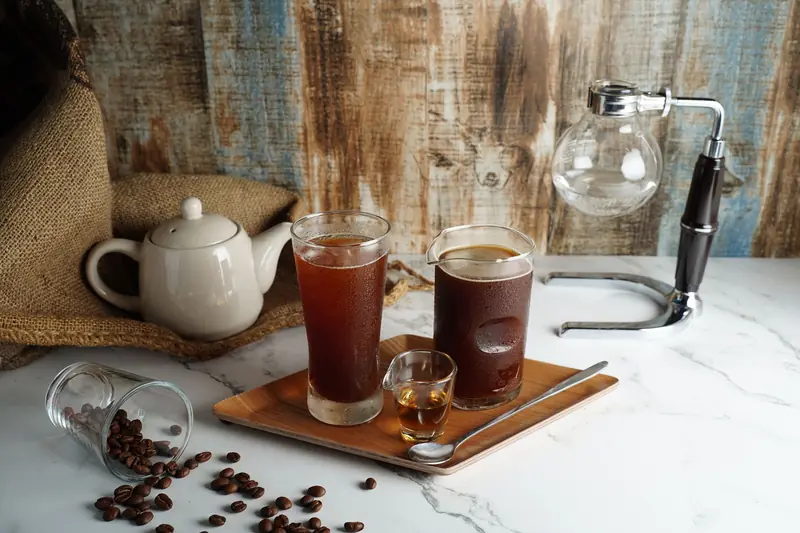
The three types of cold brew maker
Almost every home cold brew maker falls into one of three designs. An immersion pitcher or jar holds coarse grounds in a mesh basket or bag inside cold water for 12 to 24 hours. A filter jar or bottle with a fine insert works the same way but is usually narrower and fits a refrigerator door. A slow drip tower, sometimes called an ice drip or Japanese style maker, lets ice water fall drop by drop through a bed of grounds into a carafe below.
Immersion is forgiving and hands off. You fill, wait and strain. Drip towers need more attention to the drip rate, take up more height and use glass parts that are easier to break, but they finish in roughly 3 to 5 hours and tend to give a lighter, cleaner cup. Pick the design first, because capacity and filter details only matter once you know which style fits your kitchen.
Capacity: match the maker to how much you drink
Cold brew is usually made as a concentrate and diluted at serving time, so the stated capacity is not the same as the number of cups you get. A common concentrate ratio is about 1 part coffee to 4 to 8 parts water by weight, then cut with water or milk to taste. A ready to drink ratio is closer to 1 part coffee to 8 to 12 parts water. A 1 quart maker that holds roughly 4 to 5 ounces of grounds at concentrate strength can yield several servings once diluted.
If you drink one or two glasses a day, a 1 quart maker lasts a few days. A household of three or four is better served by 2 quarts or a half gallon. Larger makers mean fewer brew sessions, but they also need more refrigerator space and a bigger batch of beans, so do not buy bigger than you will finish inside a week.
Filter type: mesh, cloth or paper
The filter decides how clean the coffee tastes and how fast you can clean up. A fine stainless steel mesh is easy to rinse and lasts for years, but a little fine sediment can pass through, which some drinkers like for body and others strain out a second time. Cloth or felt filters and paper filters give a cleaner cup and trap more oils, but they need replacing or careful washing and can slow the pour.
If you already use a reusable filter for other brewing, a mesh basket will feel familiar. If clarity matters more than convenience, plan on a paper filter step after the first strain. Drip towers usually include a small filter at the top of the bed of grounds, so check what is supplied and what a replacement costs before buying.
Brew time: immersion against slow drip
Immersion makers need 12 to 24 hours in the refrigerator or on the counter, depending on grind and how strong you want the concentrate. Start with a coarse grind, similar to rough sea salt, and taste at 12 hours. If it is weak, continue and check again at 16 and 20 hours. A grind that is too fine makes the coffee bitter and clogs the filter.
A drip tower finishes in about 3 to 5 hours, and the speed is set by a valve, often around one drop every one to two seconds. The trade-off is that the valve needs a little attention at the start and the result is lighter in body than a long steep. If you like to brew in the morning for the afternoon, a tower fits. If you prefer to set up before bed, immersion fits better.
Materials, cleanup and storage
Borosilicate glass resists staining and does not hold flavors, but it is heavier and can crack if knocked. BPA free plastics such as Tritan are lighter and travel well, though they can pick up odors over time. Stainless steel is the most durable option, but you cannot see how much is left. Whatever you choose, look for a wide opening so you can reach inside with a brush, because coffee oils build up on the walls.
Store finished concentrate in a sealed container in the refrigerator. A common rule is to use it within about 7 to 10 days, since flavor fades and it can start to taste flat. A pitcher with a tight lid and a pour spout saves transferring the coffee to another bottle. A kitchen scale helps you repeat a ratio you liked, which matters more than any other detail of the brewing itself.
Frequently asked questions
Is a cold drip tower better than an immersion pitcher? Neither is better in general. A tower gives a lighter, cleaner cup in 3 to 5 hours but needs more space and care. An immersion pitcher is simpler, cheaper and holds more, which suits most households.
What size cold brew maker should I buy? For one or two drinkers a 1 quart maker is enough. For a family or heavy drinkers choose 2 quarts or more, as long as the maker fits in your refrigerator.
Can I use pre-ground coffee? You can, but pre-ground coffee is often too fine and leaves sediment and bitterness. A coarse grind, ideally from a burr grinder, gives a cleaner result.
How long does cold brew last? Concentrate stays good for about 7 to 10 days in a sealed container in the refrigerator, and it tastes best in the first few days.
Popular right now
- Best Blind Shaker CupsBuying guide
- Best Coffee Distribution Tools in 2026: Even Puck Prep for Better ShotsBuying guide
- WDT explainedGlossary
- How to Stop Espresso ChannelingArticle
- Best Latte Art Pens in 2026: Etching Tools for Detailed DesignsBuying guide
- Small Space Coffee Bar KitCollection
Based on the last 28 days of search and visitor data.