Pour-Over Coffee Ratios
As an Amazon Associate I earn from qualifying purchases.
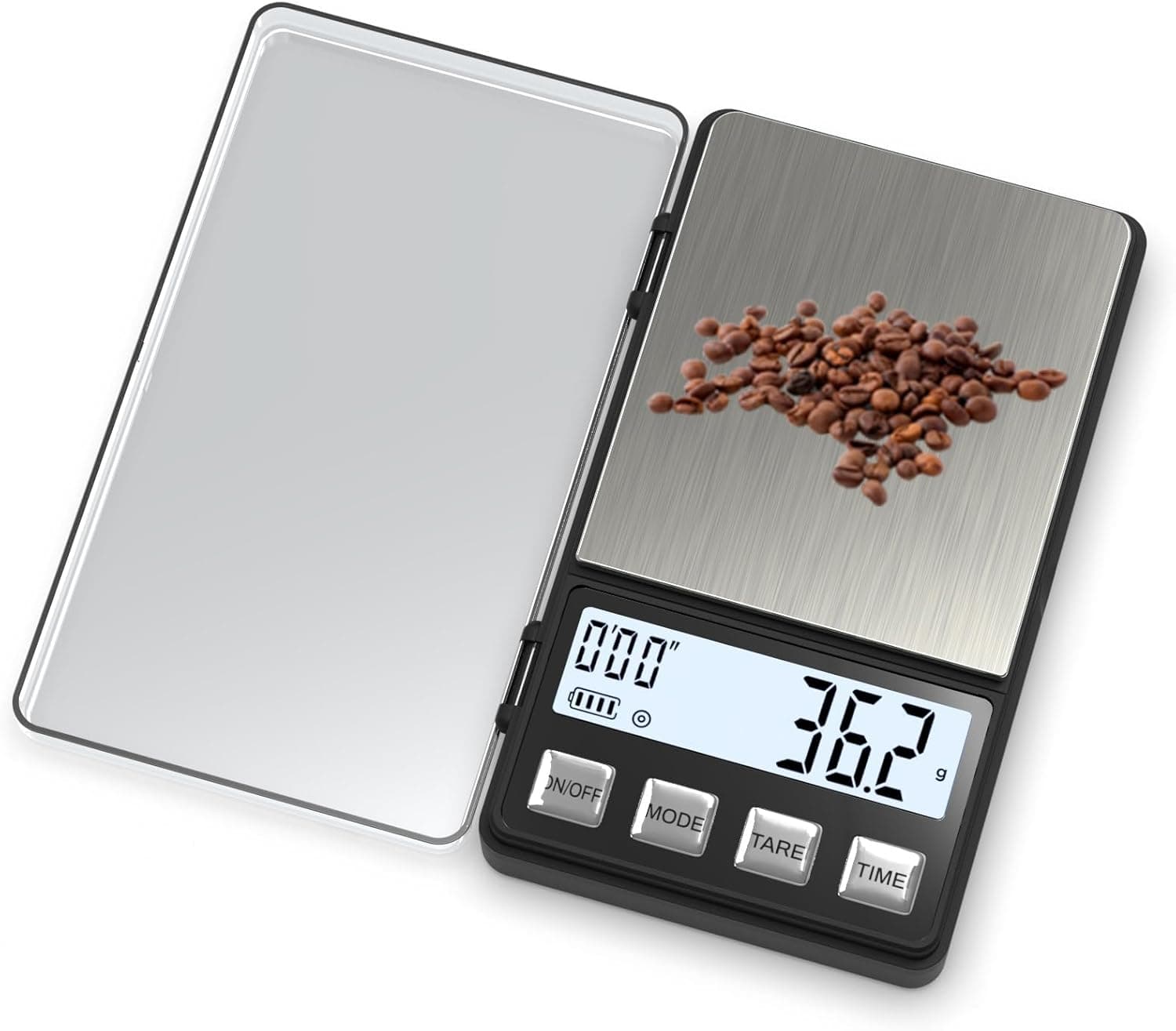
Pour-over coffee rewards precision, and the foundation of that precision is your coffee-to-water ratio. The ratio is simply how much coffee you use relative to how much water, and it sets the overall strength and balance of the cup before you pour a single drop. Once you brew by ratio and weight instead of scoops, your results become consistent and easy to adjust with intention.
A widely used starting point is somewhere around 1 gram of coffee for every 15 to 17 grams of water, often written as 1:15 to 1:17. A 1:15 ratio gives a stronger, more intense cup, while 1:17 produces a lighter, more delicate one. For a single large mug you might use 20 grams of coffee to about 320 grams of water at a 1:16 ratio. Because water weighs essentially the same as its volume in milliliters, a scale lets you measure both accurately with one tool.
A scale is genuinely important for pour-over, more so than for many other methods. Scooping by volume is unreliable because beans vary in size and density, so the same scoop can hold noticeably different amounts of coffee. Weighing your coffee and your water removes that variability and turns each brew into a measurement you can repeat or deliberately change. A scale with a timer is ideal, since timing your pour matters too.
Ratio sets strength, but grind size controls extraction, and the two work together. If you keep the ratio the same but grind finer, water moves more slowly and extracts more, which can add sweetness or tip into bitterness if taken too far. Grind coarser and the water flows faster, extracting less and risking a sour, weak cup. When a brew tastes off, decide first whether it is a strength issue, solved by ratio, or an extraction issue, solved by grind.
Pouring technique shapes how evenly the water contacts the grounds. Most pour-over methods begin with a bloom, a small initial pour that wets the grounds and lets trapped gases escape, which helps the rest of the water extract evenly. After the bloom, pour in slow, controlled stages, keeping the coffee bed level and avoiding pouring directly onto the filter walls. A steady, even pour prevents the water from channeling and gives you a cleaner, more balanced result.
Treat these numbers as a reliable starting point rather than a rigid rule. Brew a cup at 1:16, taste it honestly, and adjust: if it is too strong or too weak, change the ratio, and if it is sour or bitter, change the grind. Keep notes on what you did so you can find your way back to a cup you loved. With a scale, a timer, and a little attention, pour-over becomes one of the most controllable and satisfying ways to make coffee.